What a Lifetime Fence Warranty Actually Covers
The word doing all the work in a lifetime fence warranty is qualifying, and it's worth understanding before you buy.
September 16, 2026 · 3 min read
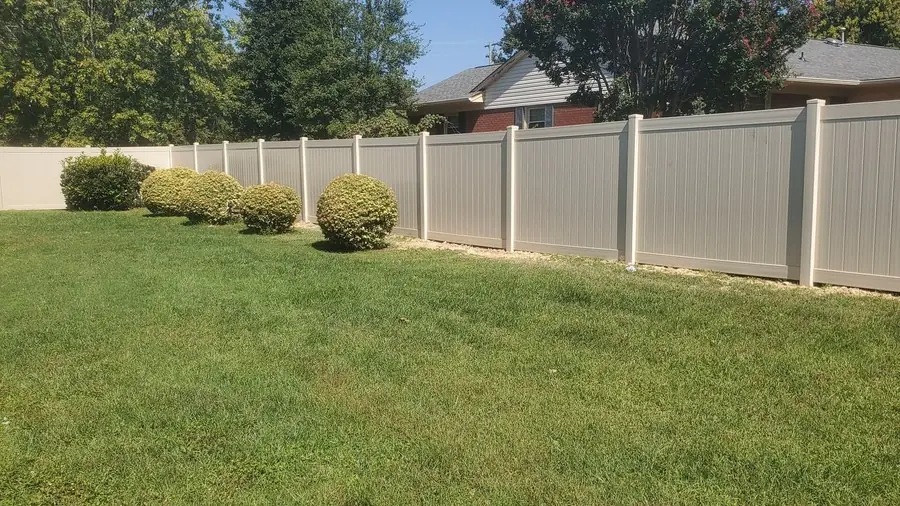
A lifetime warranty sounds like the simplest promise a company can make. In fencing, it's actually one of the more specific ones, because the phrase almost always shows up with a qualifier attached: a lifetime warranty on qualifying non wood products. That single word, qualifying, is doing real work, and it's worth understanding before you assume every fence on a property carries the same coverage.
Why Wood Isn't in the Warranty
Wood is a natural material. It moves, weathers, and ages differently depending on the specific board, how it's sealed, and how much sun and moisture it sees over the years. No manufacturer can warranty a material with that much natural variation the same way they can warranty an engineered product built to a consistent spec. That's not a knock on wood fencing, it's just why lifetime warranties in this industry are written around non wood materials specifically.
What Non Wood Actually Means Here
Non wood covers vinyl, aluminum and steel fencing and railing products, the materials manufactured to a consistent standard rather than grown and cut. Vinyl manufactured in America, and reinforced with steel or aluminum inside the posts and rails for extra strength, is a common example of a product that qualifies. Aluminum fencing, valued for being rust resistant and low upkeep, is another. These materials behave predictably enough over time that a manufacturer can stand behind them for the life of the installation.
What Qualifying Actually Means in Practice
Qualifying means the specific product line meets the manufacturer's own standard for that warranty, and it means the fence was installed the way it's meant to be installed. A product that qualifies on a spec sheet can still fall outside warranty coverage if it was installed incorrectly, modified after installation, or damaged by something the warranty was never meant to cover, like storm damage or a vehicle backing into it. The warranty covers a defect in the material or its manufacturing, not every way a fence can eventually be damaged.
Installation Is Part of What You're Actually Buying
This is the part that's easy to overlook. A lifetime warranty on a material is only as good as the installation underneath it. A qualifying vinyl fence set on posts that weren't anchored correctly for this region's clay soil can develop a problem that looks like a material defect but is really an installation issue, and that distinction matters when it comes time to make a claim. It's part of why the same company manufacturing, wholesaling and installing the fence tends to make warranty questions simpler. There's one party who can speak to both the product spec and how it went into the ground.
- Ask which specific product line you're buying qualifies for the warranty, not just the material category.
- Ask what voids it: modification, certain repairs, or damage from something other than the material itself.
- Ask whether the warranty covers materials only, or materials and labor if a repair is needed.
- Keep your paperwork. A warranty is only useful if you can show what you bought and when.
Why This Matters More in This Climate
North Carolina's humid summers and freeze thaw winters are exactly the conditions a lifetime warranty on non wood fencing is meant to hold up against. A vinyl fence with steel or aluminum reinforcement inside it is built to resist the expansion and contraction that a freeze thaw cycle puts on materials, and the warranty is the company's way of saying they trust that reinforcement to keep working. That's a meaningfully different promise than a warranty written for a mild, dry climate where the material is barely tested by the weather at all.
A lifetime warranty is a genuinely useful thing to have on a fence, but it's worth reading past the headline. Know which products on your property actually qualify, understand what would void it, and keep the documentation from the day it's installed. That's the difference between a warranty that's real protection and one that's just a word on a brochure.
One more thing worth remembering: a warranty on new fencing doesn't automatically transfer to older, mismatched sections if you're adding onto an existing fence line rather than replacing the whole thing. If part of your property already has fencing and you're extending it, ask specifically whether the new section's warranty applies only to what's newly installed. It usually does, and that's a reasonable thing to confirm before the work starts rather than assuming the whole line is covered the same way.
Crown Fence, (704) 883-8480
Call (704) 883-8480More articles
Choosing the Right Railing Contractor
A railing carries real weight and takes real weather, so the questions you ask a contractor matter as much as the price they quote.
Aluminum, Vinyl, Wood or Chain Link: Picking a Fence for a North Carolina Yard
The right fence material depends less on looks and more on how it handles this state's specific weather and ground.