Choosing the Right Railing Contractor
A railing carries real weight and takes real weather, so the questions you ask a contractor matter as much as the price they quote.
September 16, 2026 · 4 min read
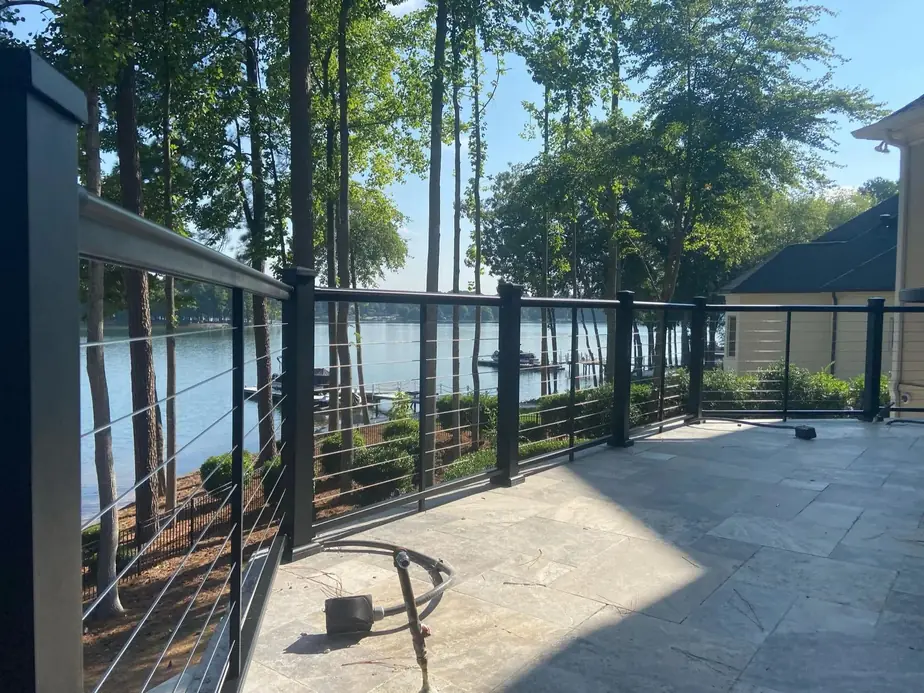
A railing looks like a finishing touch. It gets picked last, after the deck is built or the stairs are poured, almost as an afterthought. But a railing is load bearing. People lean on it, grab it going down steps in the rain, let kids climb on it when nobody's watching. It has one job and it has to do that job for years in weather that isn't gentle on hardware. That's why choosing who builds it deserves more attention than most homeowners give it.
Start With What It's Actually Made Of
Railings aren't one material with different colors. Aluminum, vinyl, wood and steel each behave differently once they're outside year round, and a contractor who can only offer one of them is going to sell you on that one whether or not it's the right fit for your porch, stairway or walkway.
- Aluminum: rust resistant and low upkeep, a good match for porches and pool areas where you want a clean look without repainting every few years.
- Vinyl: no painting at all, holds up well against humidity, works best where the railing run is straight and the look you want is simple.
- Wood: warmest look and easiest to customize on site, but it needs more attention over time than the other three.
- Steel: the strongest option, and it can be powder coated in almost any color, which matters if you want the railing to match trim or ironwork already on the house.
Ask Whether They Review Code or Just Install a Kit
There's a real difference between a contractor who orders a standard railing kit off a truck and one who reviews local building code and engineers the railing for your specific stairway, deck or commercial entrance before cutting anything. North Carolina's humid summers and freeze thaw winters are hard on fasteners, post anchors and any joint where two materials meet. A kit built for a mild, dry climate can work loose here faster than it would somewhere else. Ask directly: do you review code before you build, or do you install a standard kit and hope it fits?
This matters most at the connection points, not the rail itself. A post that's anchored into concrete a certain way, or hardware rated for exterior use rather than a lighter interior grade, is the part of the job that either holds for years or starts wobbling within one winter. It's a detail that's invisible once the railing is painted or powder coated, which is exactly why it's worth asking about before the work starts rather than trying to diagnose it after something feels loose.
Ask Who Actually Cuts the Metal
Some fence and railing companies install; a smaller number fabricate. That distinction matters more on a railing than almost anywhere else, because stairways and porches rarely come in standard lengths. A crew that has to order pre-cut sections is stuck approximating your dimensions with whatever lengths the supplier stocks. A crew with its own metal shop can cut to the actual measurement and match it to the rest of the property, whether that's an existing fence line or a specific gate style. Crown Fence has run its own in house fabrication since 1999, which is one reason the railing work looks intentional rather than bolted together from stock parts.
It also matters years later if a section ever needs to be adjusted. A fabricator with its own shop can match an existing run rather than searching for a discontinued stock part, so a repair blends in instead of standing out as an obvious patch.
Compare Quotes the Same Way, Not Just the Number
It's normal to get more than one estimate for a railing job, and it's worth doing. The mistake is comparing the bottom line number without checking that both quotes cover the same material grade, the same fabrication approach and the same attention to code. A lower number that skips code review or substitutes a lighter gauge material isn't actually a better deal, it's a different job wearing the same name.
- What material do you recommend for this specific location, and why that one over the others?
- Do you review local code before building, or install a standard kit?
- Do you fabricate the metal yourselves, or is it subcontracted or pre-made?
- What happens if a post or joint fails after installation?
- Have you built this type of railing before, on a porch, stairway or commercial entrance like mine?
A railing is one of the smaller line items on a property, but it's one of the few things on the house that people physically touch and trust every single day. Ask the questions above before you sign anything, and you'll end up with a railing that still feels solid five winters from now, not just on the day it's installed.
Crown Fence, (704) 883-8480
Call (704) 883-8480More articles
Aluminum, Vinyl, Wood or Chain Link: Picking a Fence for a North Carolina Yard
The right fence material depends less on looks and more on how it handles this state's specific weather and ground.
What a Lifetime Fence Warranty Actually Covers
The word doing all the work in a lifetime fence warranty is qualifying, and it's worth understanding before you buy.