Aluminum, Vinyl, Wood or Chain Link: Picking a Fence for a North Carolina Yard
The right fence material depends less on looks and more on how it handles this state's specific weather and ground.
September 16, 2026 · 4 min read
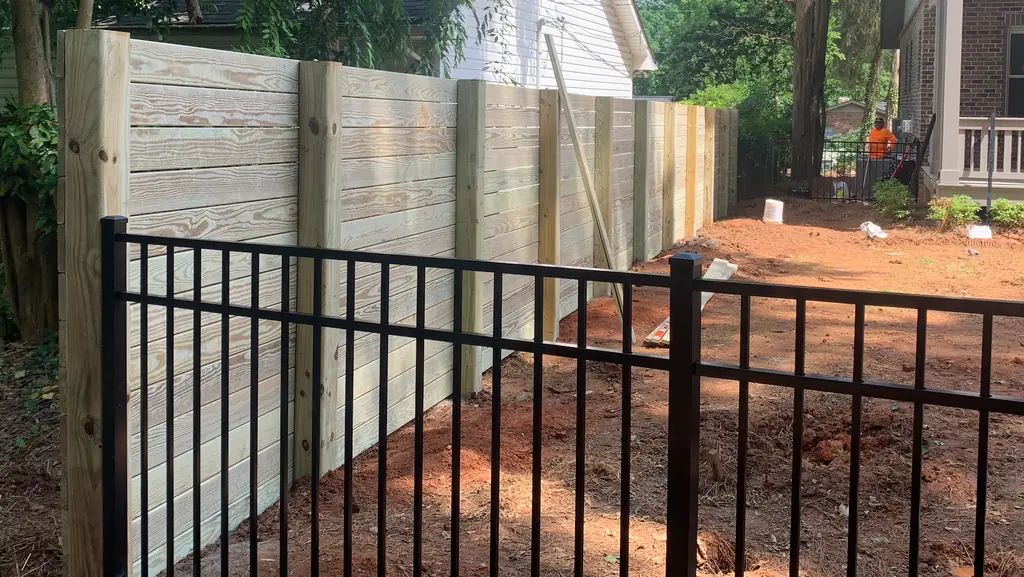
Every fence material sold in North Carolina will hold up fine in a showroom. The real test starts the first humid August, the first hard freeze that follows a wet week, and every year after that the ground shifts under a post set in Piedmont clay. Picking a fence isn't really about style first. It's about which material handles this specific climate and soil, and then which of the styles inside that material looks right on your property.
Humidity, Freeze Thaw and Clay Are the Three Things Working Against Any Fence Here
Summer humidity pushes moisture into anything porous. Winter freeze thaw cycles, where the ground freezes, thaws, and freezes again over a season rather than staying frozen straight through, work posts loose by expanding and contracting the soil around them repeatedly. Piedmont clay soil holds water longer than sandy soil, which means posts set in it experience more of that expansion and contraction than they would somewhere with better drainage. None of the four common materials are immune to all three. Each one deals with a different piece of that problem.
It's worth separating these three stresses in your head because they don't hit every part of a fence the same way. Humidity mostly affects the surface, whether something rusts, rots, or grows mildew. Freeze thaw mostly affects what's underground, the post and the soil gripping it. Clay makes the freeze thaw problem worse because it drains slowly and stays saturated longer after rain than sandy or loamy soil does. A fence can look fine above ground for a season or two while the real problem is building below it.
Aluminum: Built for the Humidity Problem
Aluminum doesn't rust, which takes the single biggest humidity related failure off the table entirely. It's low upkeep and gives you the look of ornamental ironwork without the maintenance that real iron demands in a wet climate. It's a strong fit for pool fencing, front yard fencing and anywhere you want a fence to look finished without repainting or resealing it every couple of years.
Vinyl: Made to Survive Both Ends of the Year
Good vinyl fencing isn't just plastic. Materials manufactured in America and reinforced with steel or aluminum inside the posts and rails hold their shape through both a humid summer and a freeze thaw winter better than an unreinforced panel does, because the internal frame is what actually resists the expansion and contraction, not the vinyl skin. That reinforcement is also why qualifying vinyl products carry a lifetime warranty. It's a real structural difference, not a marketing detail.
Wood: The Most Customizable, and the Most Demanding of the Soil
Wood remains the most flexible material to work with. Picket, privacy, board on board and decorative boundary styles all come from the same material, and the height, spacing and cap detail can be adjusted post by post in a way vinyl and aluminum systems don't allow. The tradeoff is that wood posts set in clay are the most exposed to the freeze thaw cycle of any material here, because wood absorbs moisture from the clay around it more readily than aluminum or reinforced vinyl. A well set wood fence in this soil still performs well; it's simply the material that rewards correct post setting the most.
Chain Link: The Practical Choice When Visibility Matters
Chain link isn't chosen for looks, it's chosen because it does something the other three don't: it secures a yard, a lot or an industrial site without blocking the view through it. Galvanized chain link is the traditional option; black chain link reads as more finished against landscaping and is common on residential jobs where the owner still wants the practicality of chain link without it looking purely utilitarian. Neither finish is more or less durable against this state's weather than the other, the difference is entirely how it looks.
- Aluminum: best against humidity and rust, minimal upkeep, common for pools and front yards.
- Vinyl: steel or aluminum reinforced inside for real strength against both humidity and freeze thaw, lifetime warranty on qualifying products.
- Wood: most customizable style and detail, needs the most attention to post setting in clay soil.
- Chain link: practical security with visibility retained, galvanized or black finish, residential through industrial use.
None of these four materials is universally the right answer. The right one is the one that matches what your yard actually needs to do, whether that's keeping a pool area code compliant, blocking a neighbor's view, letting a dog see the street, or securing a commercial lot, while surviving the specific weather and ground this part of North Carolina puts it through.
If you're not sure which of the four fits your specific yard, that's a reasonable thing to ask a fence contractor to walk through with you before you settle on anything. A site evaluation that looks at drainage, soil, sun exposure and what the fence actually needs to accomplish will usually point toward one or two materials pretty clearly, even before style enters the conversation at all.
Crown Fence, (704) 883-8480
Call (704) 883-8480More articles
Choosing the Right Railing Contractor
A railing carries real weight and takes real weather, so the questions you ask a contractor matter as much as the price they quote.
What a Lifetime Fence Warranty Actually Covers
The word doing all the work in a lifetime fence warranty is qualifying, and it's worth understanding before you buy.