Gate Automation: What to Decide Before the Gate Is Built
A driveway gate and its opener are one decision, not two, and planning them separately is the most common reason automation gets added later at extra cost.
September 16, 2026 · 4 min read
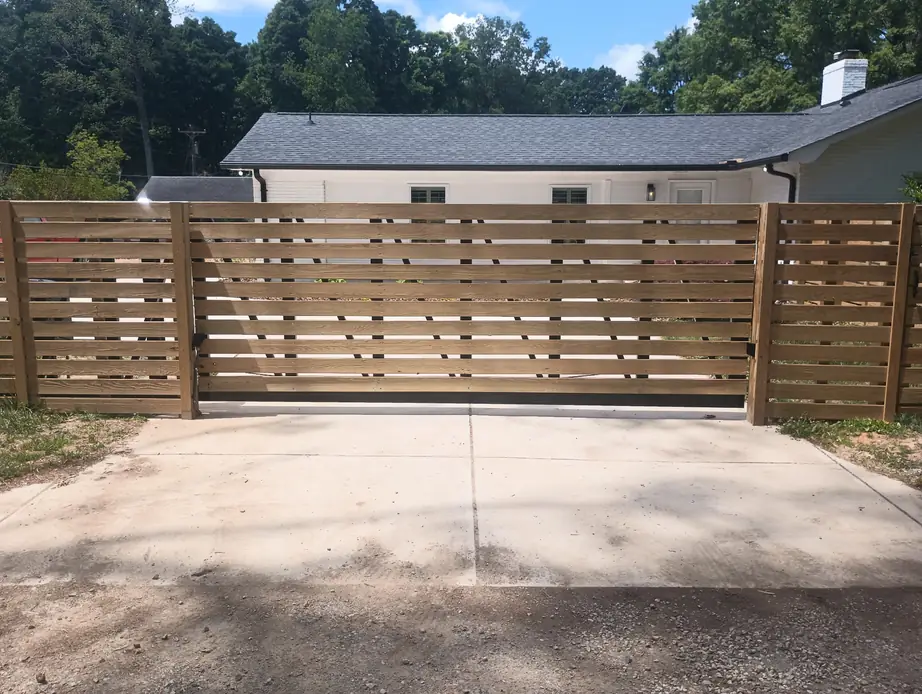
It's tempting to think about a driveway gate and its automation as two separate purchases: build the gate now, add an opener later if you decide you want one. In practice that order of operations usually costs more and works worse than deciding both at the same time, because the gate's weight, swing or slide direction, and hardware all change depending on whether an opener is part of the plan from the start.
The Access Question Comes Before the Hardware Question
Before picking an opener, it's worth being clear about what problem automation is actually solving. A residential driveway gate is usually about convenience, not opening and closing a heavy gate by hand every time you come and go, and about keeping the driveway looking clean and controlled. A commercial gate is more often about access control specifically, managing who can get onto a lot or job site and when, sometimes tied into a keypad or credential system. Those are different problems, and they point toward different equipment.
Custom or Prefabricated Changes What's Possible
A prefabricated gate is built to standard dimensions and is usually the faster, more affordable route when a driveway opening is a common width and there's no unusual slope or obstruction to work around. A custom gate, built and fitted specifically to the opening, makes more sense when the driveway is wider or narrower than standard, when the gate needs to match an existing fence line exactly, or when the site itself, a slope, a curve, a tight turning radius, requires something built to fit rather than adjusted to fit. Automation planning changes with this choice too, since a custom gate's exact weight and swing have to be known before the right opener can be specified.
This is also where in house fabrication changes what's actually possible. A custom gate built by a shop that also does the fence's metalwork can be sized and reinforced specifically for the automation it's going to carry, rather than having an opener retrofitted to a gate that was built without that weight in mind. A wood slat gate on a driveway, for example, can be framed with a steel or aluminum core that a purely wood build wouldn't have, which keeps it from sagging once an opener is cycling it open and closed every day.
A Gate Is the Part of the Fence That Moves, Which Is Why It's the Part That Fails
Every other section of a fence just has to stand still. A gate has to open, close, and latch correctly hundreds of times a year, which means hinges, latch alignment and swing clearance matter more here than anywhere else on the property. When a gate is designed with automation in mind from the start, the hardware and the opener are matched to each other, so the latch lines up and the gate closes the way it's supposed to instead of needing constant adjustment. That alignment is exactly what separates a gate that works quietly for years from one that needs troubleshooting every few months.
Match the Gate to the Fence It Interrupts
A driveway gate isn't a standalone structure, it's the one section of a fence line that has to move, and it should look and perform like it belongs to the rest of the fence rather than like a separate project bolted on afterward. That's easier to get right when the same people building the fence are also planning the gate and its automation together, matching material, finish and hardware from the start rather than retrofitting an opener onto a gate that was never designed for one.
- Decide the access problem first: convenience for a residential driveway, or controlled access for a commercial site.
- Decide custom or prefabricated based on the driveway's actual dimensions and site conditions, not just cost.
- Confirm the gate's weight, swing or slide direction and hardware are chosen with the opener in mind, not after.
- Ask how the gate will be matched to the rest of the existing fence line in material and finish.
Planning the gate and the opener together, rather than treating automation as something to bolt on later, is what makes the difference between a driveway gate that works smoothly for years and one that's fighting its own hardware from the first week.
If you already have a gate and you're only now considering automation, it's still worth having someone look at the gate itself before an opener is ordered. The hinges, the post it's hung from, and how square the gate sits in its opening all determine whether an automated system will run smoothly or fight the gate every single cycle. Sometimes the honest answer is that the gate needs adjustment first, and the opener is the easy part once that's done.
Crown Fence, (704) 883-8480
Call (704) 883-8480More articles
Choosing the Right Railing Contractor
A railing carries real weight and takes real weather, so the questions you ask a contractor matter as much as the price they quote.
Aluminum, Vinyl, Wood or Chain Link: Picking a Fence for a North Carolina Yard
The right fence material depends less on looks and more on how it handles this state's specific weather and ground.